Telling solid wood from veneer
5 min read
Simple checks you can do in the shop in a couple of minutes, and why veneer is not always the lesser option.
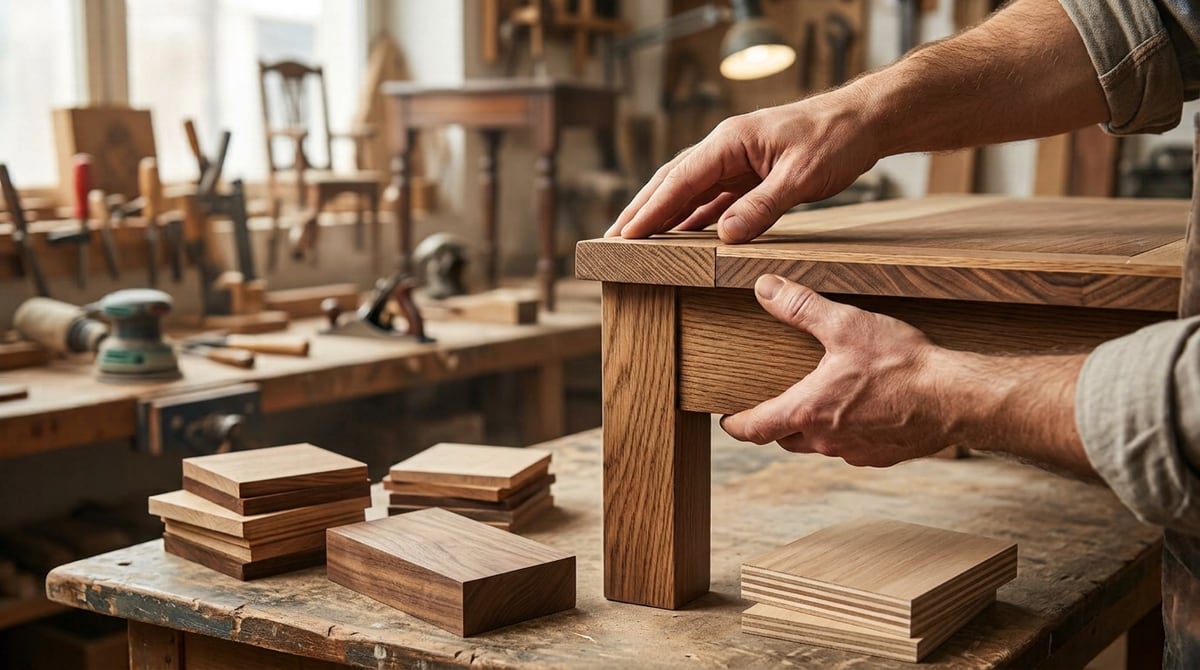
Solid wood means the part was cut from one piece of timber. Veneer is a thin layer of real wood glued onto plywood, chipboard or a cheaper timber. Both are genuine materials and both belong in good furniture - what matters is knowing which one you are buying.
Look at the edges, not the surface
This is the quickest check. Find where the surface meets an edge, such as a table corner or the side of a door. On solid wood the grain wraps around the corner: what you see on top continues down the side. On veneer the top pattern stops and the edge shows a thin separate strip or a plain band.
Check whether the pattern repeats
Knots and grain never repeat exactly in nature. If you see two identical patterns mirrored, or spaced at regular intervals across a wide surface, that is almost always veneer sliced into sheets and laid side by side.
The underside tells the truth
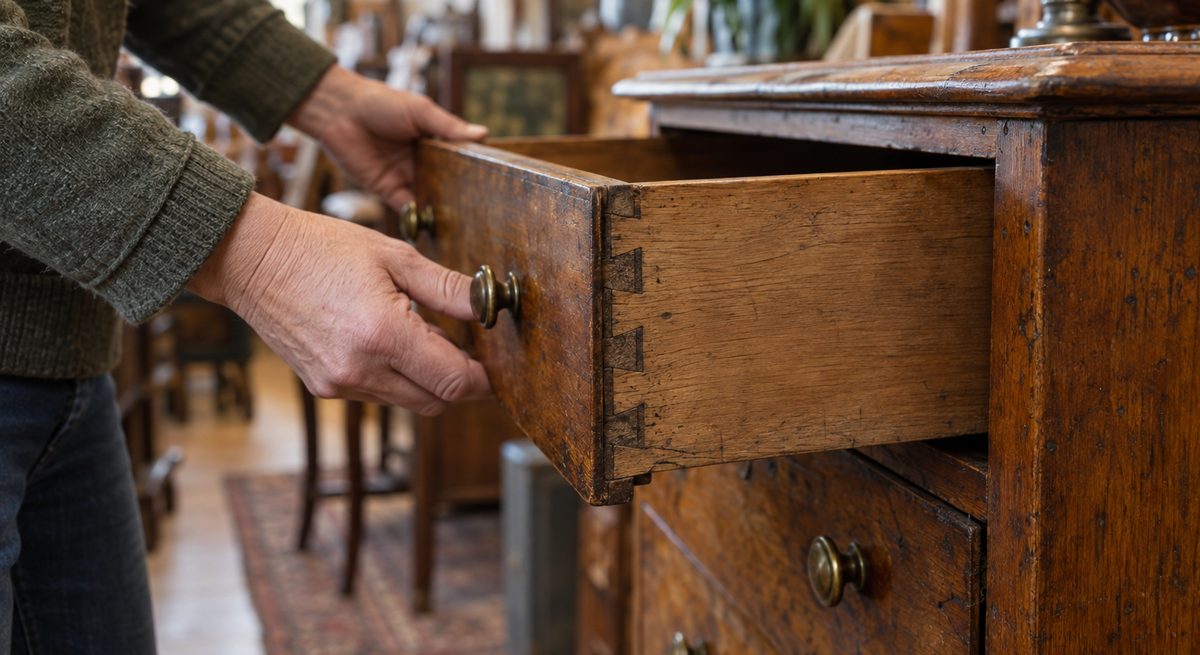
- Look under a tabletop or at the bottom of a drawer - little is disguised there.
- A greyish underside with visible chips is chipboard with veneer on top.
- A layered, striped edge is plywood, a perfectly sound base under good veneer.
- Continuous grain running through in every direction means solid wood.
Weight and sound
Solid wood furniture is usually heavier than it looks. Tap the surface lightly with a knuckle: solid wood answers with a lower, denser sound, while chipboard rings hollow and flat. It is not conclusive on its own, but it helps alongside the other signs.
Why veneer is not the lesser choice
In older quality furniture, veneer was used because it allowed beautiful, rare timber across large surfaces where solid wood would have split. A wide solid top reacts to humidity and can warp over the years; veneer over a stable base stays flat. Many of the most handsome old wardrobe and chest surfaces are veneered by intention, not to save money.
What actually matters when buying
- Whether the veneer has lifted or bubbled, especially at edges and near water.
- Whether joints are firm - loose ones can be tightened, cracked ones are harder.
- Whether drawers run smoothly and evenly.
- Whether damage is only in the finish or already in the wood beneath.
If you are unsure, ask us. We will tell you what a particular piece is made of, and whether it is worth restoring.
See what is in the shop right now
Full catalog