Caring for old wooden furniture
5 min read
What to do monthly, what to do once a year, and what never to do, so an old piece lasts another generation.
Old furniture is rarely ruined by use. It is ruined by conditions: a dry season, a radiator against the wall, and the wrong cleaning products. The good news is that looking after it takes very little time when done regularly.
Humidity matters more than anything else
Wood keeps moving for its whole life: it swells in damp air and shrinks in dry air. Winter, when heating dries out a room, is when joints crack and veneer lifts. Keep humidity roughly between 40 and 60 per cent and most problems simply never start. Do not stand furniture hard against a radiator or in direct sunlight.
Everyday cleaning
- Dust with a dry or barely damp soft cloth, working along the grain.
- Wipe spills immediately - water marks form in minutes, not hours.
- Never use all-purpose cleaners, spirits, or ammonia-based glass cleaners; they strip finish and wax.
- Avoid silicone polish sprays: they give a shine that builds up over time and makes later restoration harder.
Once a year: wax or oil
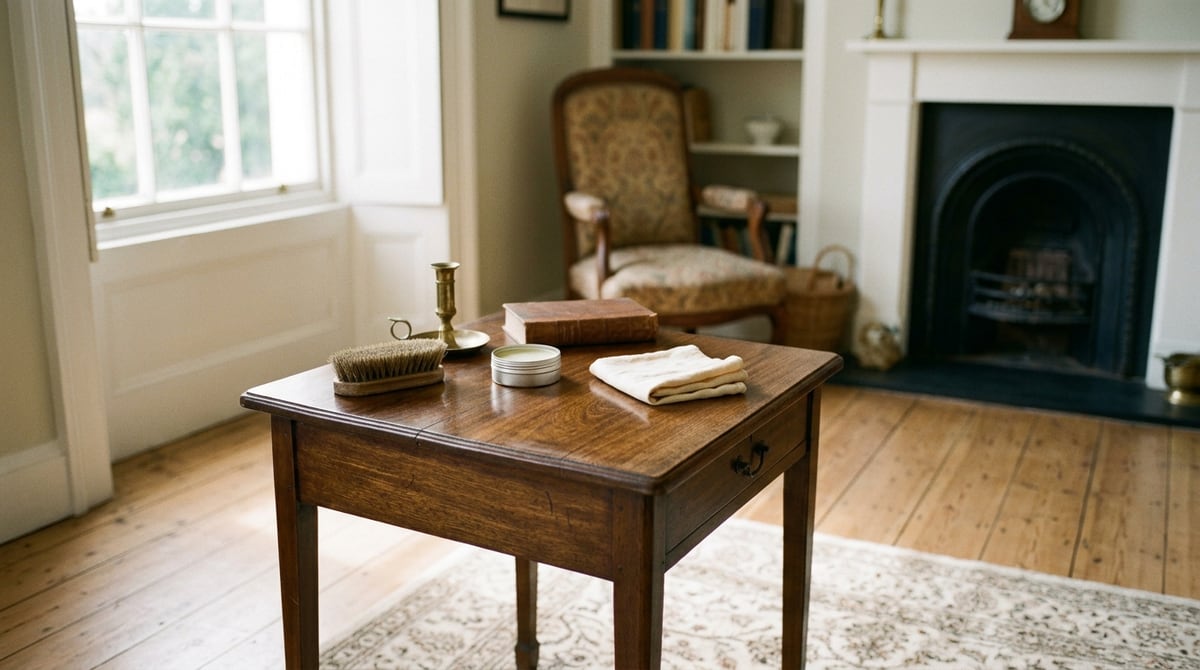
A lacquered surface needs nothing more than cleaning. A waxed or oiled surface benefits from a thin coat once a year of whatever matches it: wax on waxed wood, oil on oiled wood. Apply very little, work it in, and wipe off the excess. A thick layer gives no more protection, only a sticky surface.
Scratches and marks
- A pale water mark in a finish often lifts if you warm the surface gently and work in some wax.
- A shallow scratch becomes far less visible when filled with tinted wax, or rubbed with a walnut kernel.
- A deep scratch through to bare wood is a restorer's job, not a home repair.
- Never sand an old veneered surface - it is thinner than it looks and can be worn through in seconds.
Drawers, doors and fittings
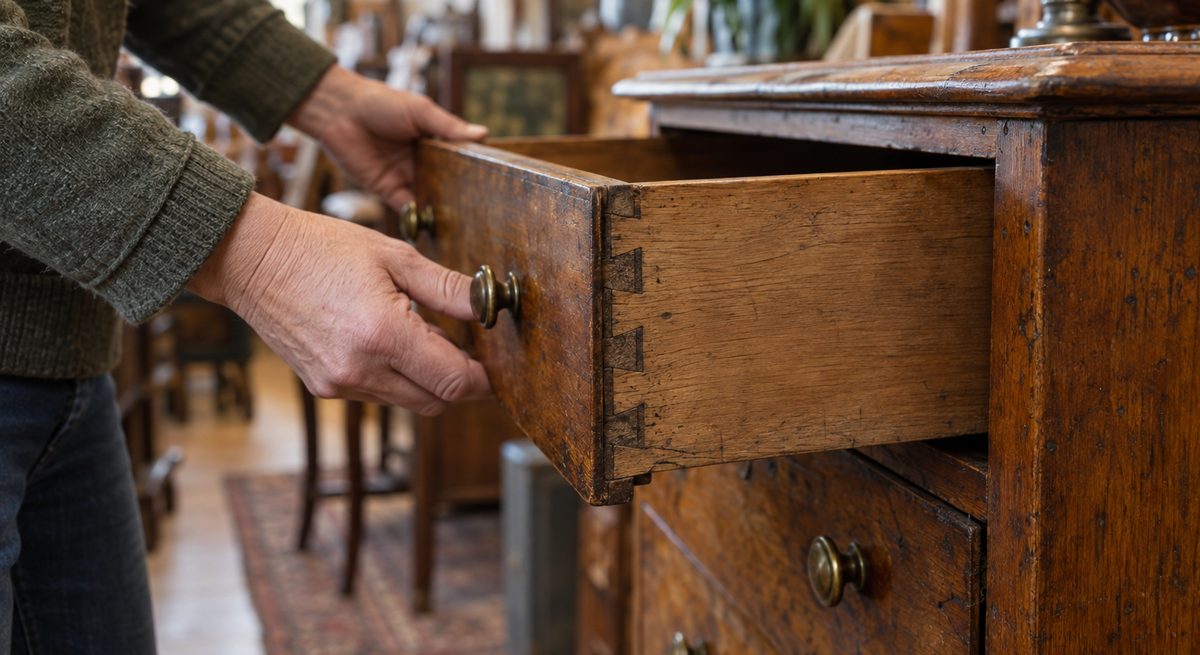
If a drawer sticks, rubbing a piece of dry soap or a candle along the runners usually fixes it. Tighten loose hinge screws gently; if a screw spins without biting, glue a wooden toothpick into the hole and drive it again.
When to call someone
A wobbling joint, a leg working loose, lifting veneer or a crack in a surface all get worse with time. These are easier and cheaper to fix early. If you are not sure, send us a photo and we will tell you whether it can be repaired and whether it is worth it.
See what is in the shop right now
Full catalog